
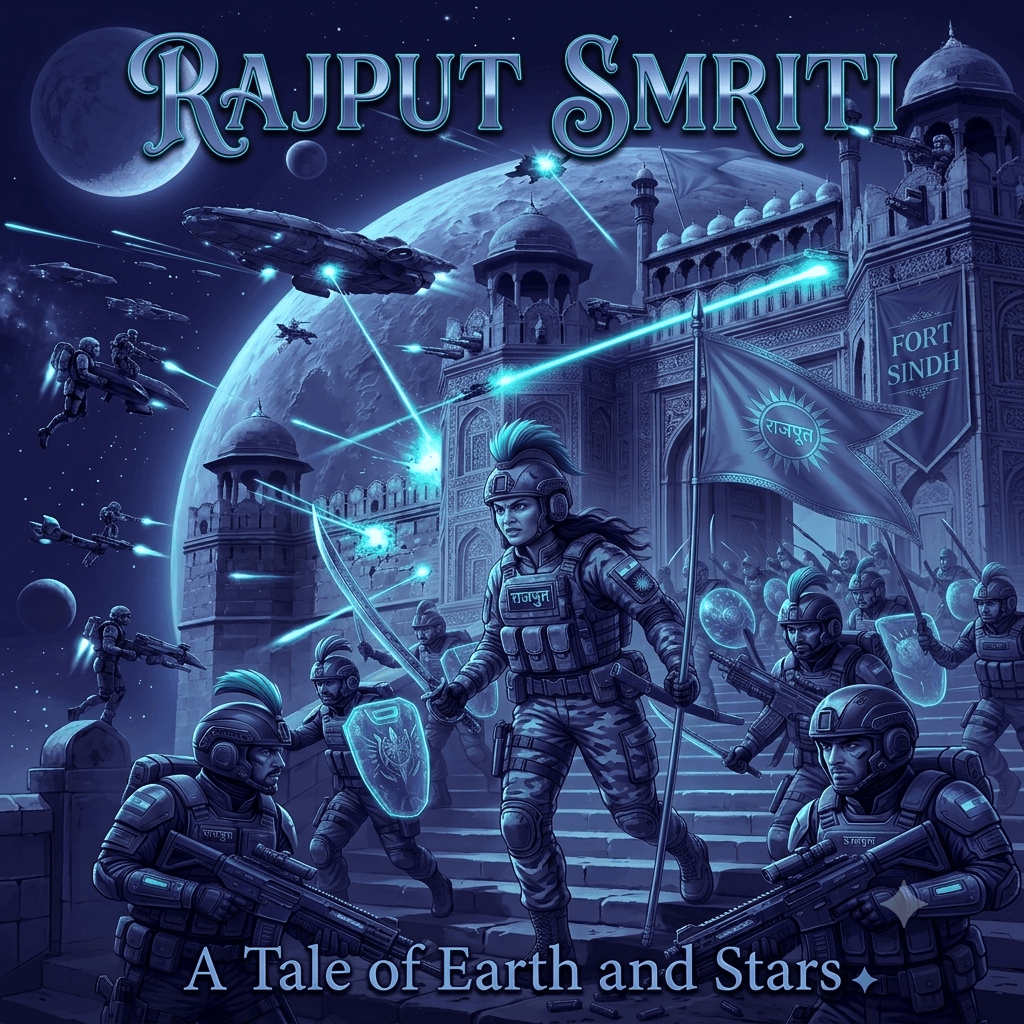
The Mission of Rajput Mother Academy
Systemic informational gaps and financial hurdles continue to limit higher education and career opportunities within the Rajput community. Recognizing that external government support remains nil, the Rajput Mother Academy is dedicated to breaking this cycle. We believe true empowerment lies in academic excellence and advanced studies, irrespective of an individual’s current financial background or employment status. By encouraging sustainable livelihoods through agriculture and local enterprise, we aim to channel primary focus back toward higher learning. Our mission is clear: equip every student with the knowledge, guidance, and strategic education needed to excel independently.
Empowering Rajput Youth in Engineering: A Visionary Pathway to Excellence
Engineering stands as one of the most dynamic, impactful, and rewarding career paths for young Rajput scholars. It bridges traditional strength with modern technology, opening vast frontiers in innovation, global research, entrepreneurship, public services, and high-tech industries. As India advances as a global technology hub, engineering offers a powerful platform to contribute meaningfully to national development while building leadership in cutting-edge fields.
The Admission Landscape: Opportunities and Realities
Every year, India offers approximately 16 lakh engineering seats across Government Institutions, Central/State Universities, Deemed Universities, and Private Engineering Colleges.
Within this vast national pool, nearly 7 lakh seats are available under the Open (General / Unreserved) and EWS (Economically Weaker Sections) categories:
- Open (UR) & EWS Quotas: Primary pathways through which Rajput candidates secure admissions based on competitive merit.
- Female Supernumerary Seats: Special affirmative provisions in elite institutions (such as IITs and NITs, typically ranging from 5% to 20%) designed to enhance gender diversity.
- Sports Quotas: Specialized merit seats offered by select state and central universities for eligible national/state-level athletes.
Despite these nationwide opportunities, currently only about 50,000 Rajput students matriculate into engineering programs annually. Key hurdles include:
- Information Asymmetry: Lack of authentic, timely guidance regarding national/state entrance examinations and seat allotment processes.
- Financial Barriers: Limited access to information on merit-cum-means scholarships, fee waivers, and educational loans.
- Career Mentorship: Insufficient exposure to domain specializations, career trajectories, and institutional selection strategies.
Institutional Support: Rajput Mother Academy’s Strategic Mission
To bridge this gap, the Rajput Mother Academy has established a long-term strategic mission: To guide, inspire, and support 5 lakh Rajput students in achieving quality engineering education across leading Indian and international universities.
Reality of Medical Seats: Strategic Roadmap for Rajput Aspirants
Abstract
Across Indian medical education, approximately 2,00,000 total medical seats—encompassing MBBS, BDS, and allied health sciences in both government and private institutions—are contested annually through NEET. However, owing to systemic information deficits, minimal institutional support, and severe financial constraints, only an estimated 2,000 Rajput students secure admission each year. The Rajput Mother Academy seeks to bridge this representation gap by establishing structured academic guidance, financial planning, and global seat access to help scale community representation toward 50,000 admissions across national and international medical institutions.
I. Analysis of Seat Allocation Dynamics
Navigating entrance to medical education requires a realistic evaluation of seat distribution and competitive cutoffs under current regulatory frameworks:
- General Category Constraints: Out of approximately 2,00,000 total seats across government and private medical colleges, only about 1,00,000 seats fall under the unreserved General (Open Merit) category.
- Merit-Based Competition: High-scoring reserved-category candidates frequently qualify directly on general merit, further narrowing the unreserved open seat margin for general applicants.
- Socio-Economic Barriers: The combination of intense competition for low-cost government seats and high tuition fees in private institutions creates an entry barrier for capable but financially constrained students.
Total Seat Pool: ~2,00,000 Seats (Government + Private + Allied)
T├── General Open Merit Pool: ~1,00,000 Seatsotal Seat Pool: ~2,00,000 Sea└── High Open-Merit Competition & Financial Cutoffs
II. Core Causes of Under-Representation
The deficit in Rajput student enrolment within medical fields stems from three primary factors:
- Information Gap: Lack of timely awareness regarding seat matrices, counselling procedures, cutoffs, and international medical university options.
- Guidance Deficit: Inadequate mentorship during early secondary education regarding structured NEET preparation frameworks.
- Financial Vulnerability: Insufficient capital planning to afford private college fees, foundation coaching, or initial application costs.
III. Rajput Mother Academy Action Plan
To move from the current baseline of ~2,00,000 total seats yielding only ~2,000 Rajput medical admissions to a long-term goal of 50,000 global medical admissions, the academy employs a three-pronged intervention:
- Academic Discipline & Early Foundation: Implementing the 12-hour daily study rule and high-yield question paper analysis for PCM/PCB students starting from 11th standard.
- Financial Mobilization & Guidance: Informing families about educational loans, scholarship programs, state-level welfare schemes, and low-cost accredited medical universities abroad.
- Domestic & International Application Strategy: Guiding candidates to apply strategically across All-India Quota (AIQ), state quotas, private institutions, and verified international medical colleges.
Abstract and Institutional Context
The National Eligibility cum Entrance Test (Undergraduate), administered by the National Testing Agency (NTA), serves as the single-window entrance examination for admission into undergraduate medical education across India. It regulates entry into Bachelor of Medicine and Bachelor of Surgery (MBBS), Bachelor of Dental Surgery (BDS), AYUSH degrees (BAMS, BHMS, BUMS, BSMS), and Bachelor of Veterinary Science (BVSc & AH) programs across central, state, deemed, and private medical institutions.
For students of the Rajput community seeking to build careers in medicine, clearing NEET UG requires an analytical approach to competitive testing, understanding state and central seat allocation mechanics, and developing long-term academic discipline.
Here is a refined, academic, and structured version of your message, designed for community guidance, educational proposals, or leadership communication.
Strategic Educational Framework for Competitive Success
1. Shift from Single-Goal Orientation to Strategic Diversification
While pursuing admission to prestigious defense institutions like the National Defence Academy (NDA) is an honorable ambition, high-competition entry exams operate under severe intake constraints, often offering only double-digit seats annually. Candidates and families must distinguish between personal dedication and systemic probability.
Failing to secure a seat in a highly competitive selection process is not a failure of character, legacy, or capability. Instead, it underscores the urgent need to align aspirations with contemporary educational requirements. Pursuing higher education and alternative career pathways immediately after a selection attempt preserves momentum, opens dynamic career avenues, and builds long-term institutional leadership.
2. Modernizing Skill Sets and Physical Preparedness
To maximize potential in modern selection processes—which evaluate both comprehensive intellectual capability and physical agility—candidates should align their preparation directly with official assessment criteria:
- Targeted Physical Training: Transition focus toward track and field events (endurance running), swimming, marksmanship (shooting, archery), javelin, and disciplined physical conditioning (yoga). These disciplines directly build the stamina, core strength, focus, and coordination required for officer selection boards.
- Focused Resource Allocation: Reclaim valuable time by minimizing non-productive engagement with political commentary, passive entertainment, and unstructured social activities, reallocating those hours toward focused study and structured training.
3. Institutional Modernization: Technology, Pedagogy, and Support Systems
Addressing gaps in performance requires overcoming information asymmetry and traditional learning constraints. Community support systems and families must prioritize educational investment through three core pillars:
- Integration of Advanced Learning Technologies: Leverage AI-driven adaptive platforms, structured online coursework, recorded lecture series, and digital repositories to bridge regional and informational gaps.
- Hybrid Educational Models: Combine self-paced digital learning with rigourous, in-person competitive exam coaching to ensure both conceptual depth and classroom discipline.
- Family Alignment and Financial Prioritization: Encourage parents and mentors to prioritize direct academic and skill-based investments over conventional non-essential expenditures, fostering an environment that actively supports informed career planning.
Summary of Strategic Priorities
| Focus Area | Traditional Approach | Recommended Strategic Shift |
| Career Planning | Single-intent target (NDA only) | Primary defense target + robust higher education alternative |
| Physical Readiness | Unstructured recreational sports | Targeted athletics (running, swimming, marksmanship, yoga) |
| Learning Methodology | Rote learning / isolated study | Hybrid model (AI, online resources, competitive physical coaching) |
| Information Access | Limited local awareness | Active utilization of digital platforms and guidance networks |


Leave a comment